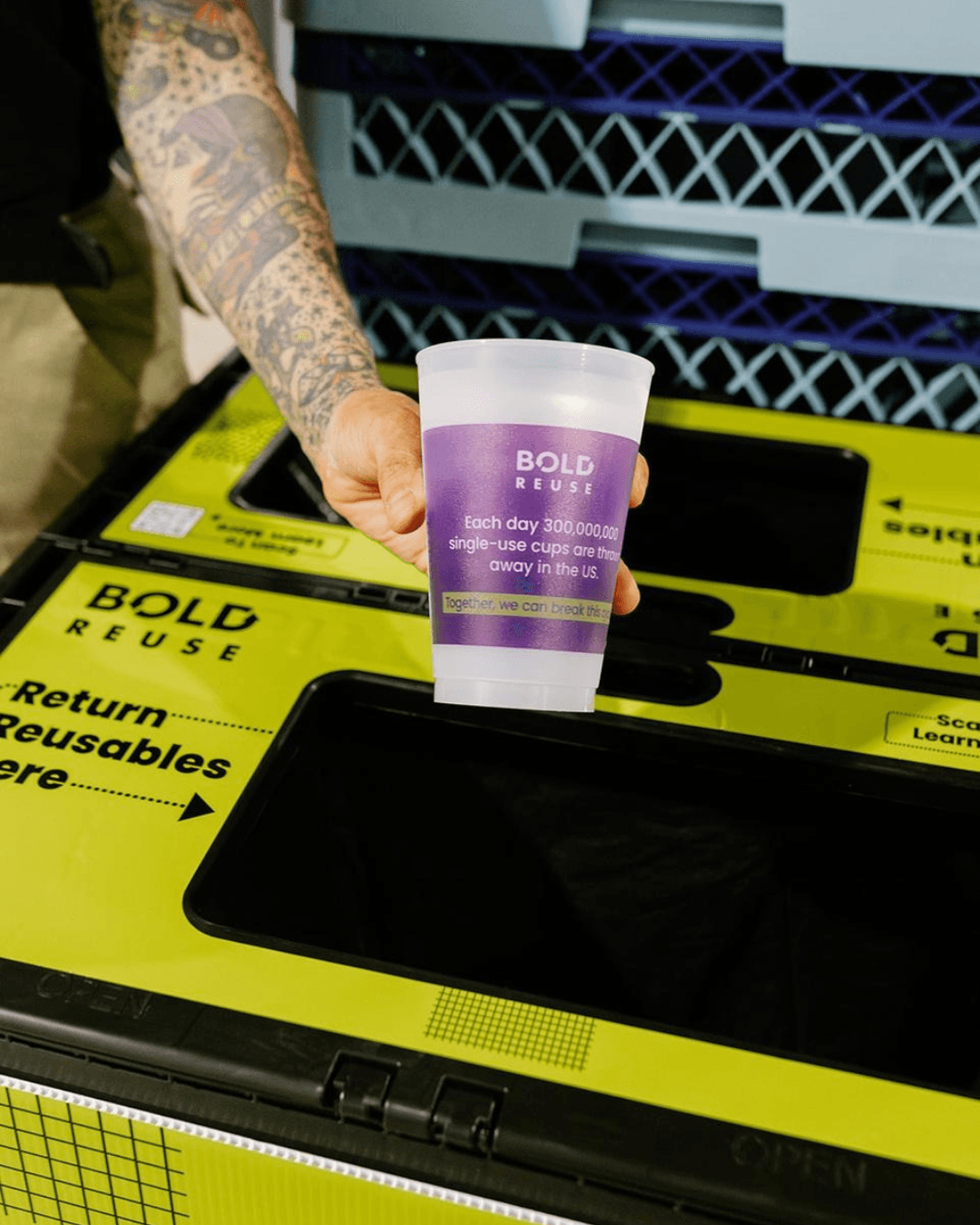
As California's SB 54 regulations take effect, venue operators across the country are paying closer attention to reusable food service systems. Read what early adopters are learning, why guest participation is exceeding expectations, and how reusable cup and food service programs are becoming a competitive advantage for venues preparing for the future.
Bold Reuse
If you're reading about California's SB 54 regulations and thinking, "Good thing I'm not in California," you might be missing the bigger story.
This isn't really about California. It's about how quickly the conversation in our industry is changing.
A few years ago, venue leaders were asking whether reuse could even work at scale. Today, the question is how to scale it. That shift matters, and the compliance conversation is one reason why.
California Is a Signal, Not the Story
On May 1, 2026, California's SB 54 officially took effect, requiring a 25% reduction in single-use plastic packaging and food service ware by 2032. If you're outside California, that might feel like someone else's problem.
It's not. Regulatory shifts don't stay contained to one market, and neither do operational best practices or sponsor expectations. In sports and entertainment especially, what works in Portland gets tested in Seattle. What works in California shows up in conference sessions and industry playbooks across the country. We're already seeing that happen.
What Venue Operators Are Actually Saying
Most venue leaders still have questions about reuse. Will it cost more? Will operations support it? Will guests actually participate? Those are fair questions, and they've been circulating for years.
What's changed is that the venues already running programs aren't asking them anymore.
We recently surveyed operators across sports, entertainment, and event venues who have active reuse programs. Every single one said they'd recommend reuse to a peer. Eighty percent reported measurable cost savings. Three-quarters said they've seen strong guest enthusiasm and real sponsorship potential. Half reached routine operations within one to three months of launch.
These aren't the numbers of an industry still experimenting. They're the numbers of an industry figuring out how to grow something that works.
The Gap Between Perception and Reality
The biggest surprise in our data isn't any single stat. It's the distance between what operators expect and what they actually experience.
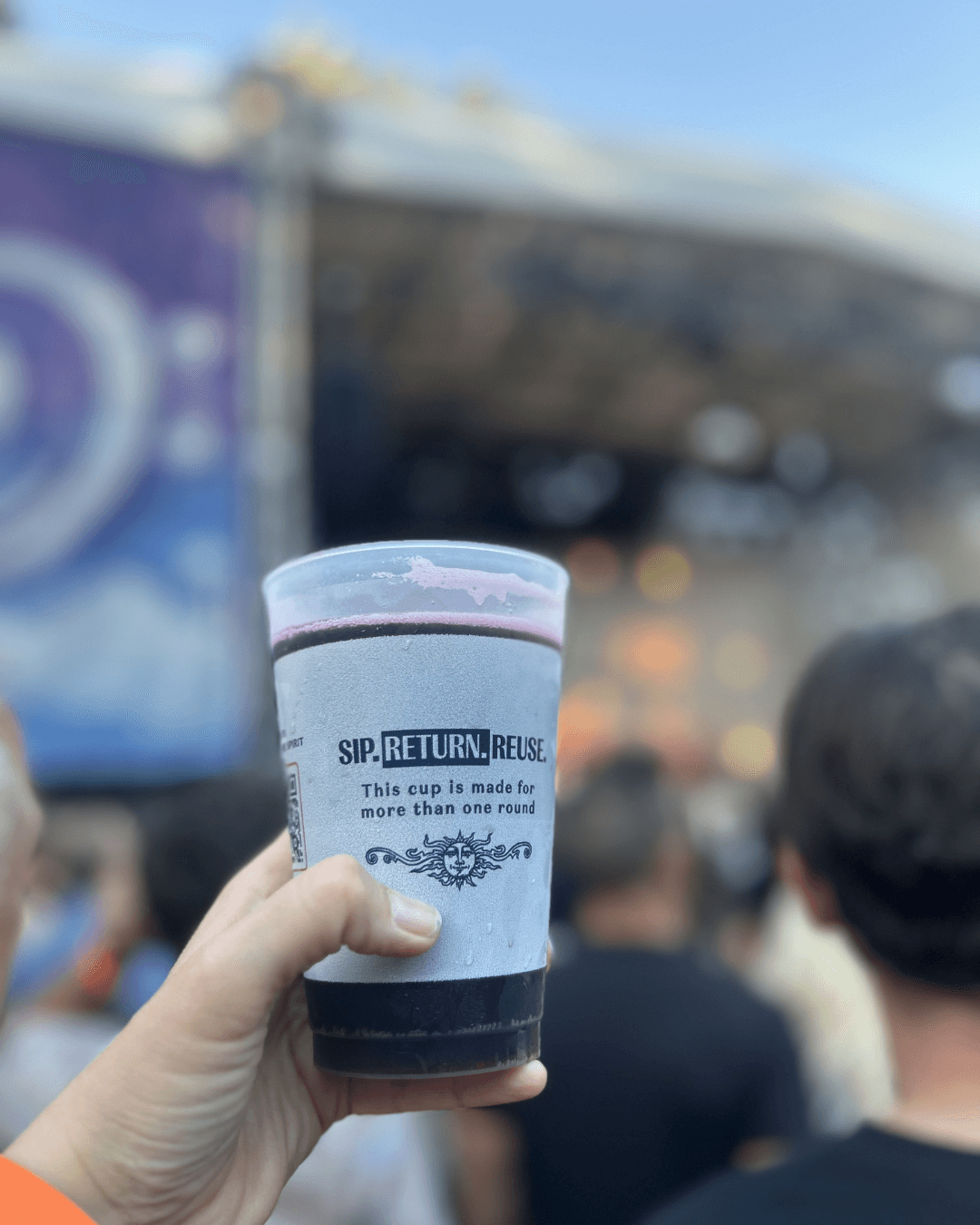
Guest participation is a good example. Changing behavior at a busy venue, when thousands of people are moving through the building in a single night, feels genuinely risky. But 75% of operators surveyed report enthusiastic guest participation, and just as many say guests are actively asking for reuse to expand into more areas and events. That's not resistance. That's demand.
The same pattern shows up on the operations side. Reuse can look complicated from the outside. There are cups to collect, inventory to track, and new workflows to train. But operators who've been through it describe the learning curve as shorter than expected, and the rewards as clearly worth it. Half were in routine operations within three months.
Sponsorship is where the conversation has shifted most dramatically. For years, sustainability initiatives lived in the expense column. Important, but not revenue-generating. That's changing. The Portland Timbers recently launched with Skanska as their reuse partner, and McMenamins with Straightaway Cocktails.
Sponsors care about visibility and community impact. Reuse gives them a tangible, high-profile platform for both.
What's Actually at Stake
The risk most operators think about is compliance, and yes, that clock is moving. But the more significant cost of waiting is the operational experience you're not building.
The venues that started early are now refining systems, not learning them. They've built internal knowledge, developed sponsor partnerships, reduced waste-related costs, and created processes their teams actually understand. By the time expectations shift, they won't be starting from scratch.
The question for everyone else isn't whether reuse will eventually matter. That's settled. The question is how much runway you want before it does.