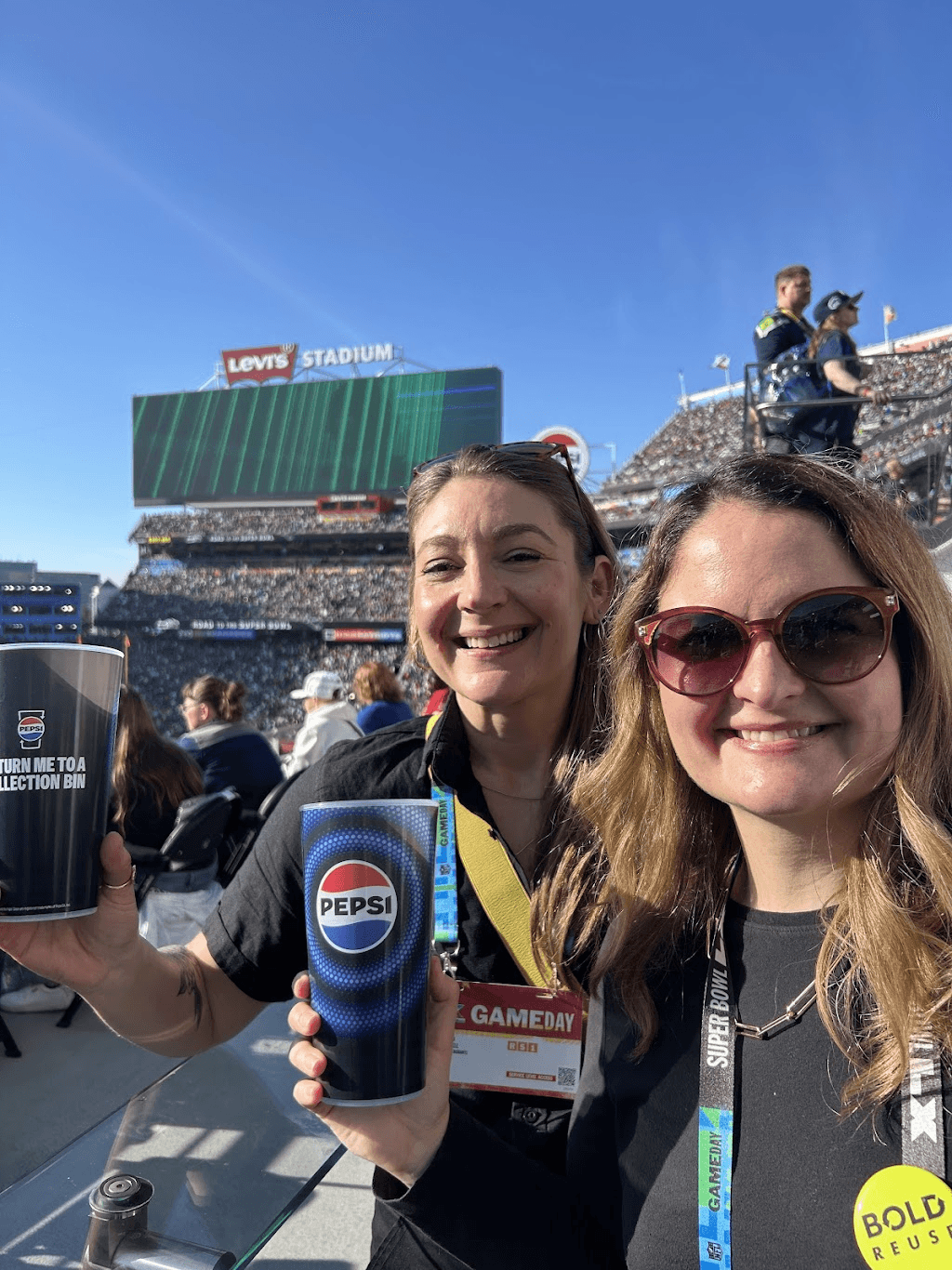
At the Super Bowl, we saw that well-designed reusable systems can deliver a premium fan experience while reducing waste, labor, and long-term costs. The biggest takeaway: reuse is already operationally viable at the highest level of live events—the real opportunity now is making it the default.
Heather Watkins
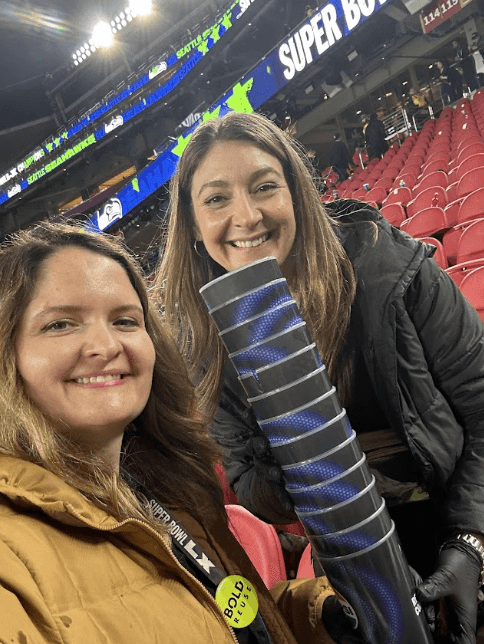
My co-founder and I had the incredible opportunity to attend the Super Bowl this year, and we're grateful to have experienced reuse integration at the highest level of the sports world. We went in wearing our operator hats, having worked alongside venues, teams, and events for years. As a result, we had a pretty clear set of expectations about what "premium" looks like at this scale and how fans tend to behave.
What we saw was genuinely exciting and clarifying in ways we didn't expect.
The experience itself was absolutely world-class. What stood out to us were a few observations about where reuse is already working beautifully, and where there might be opportunities for the entire industry to build on this momentum.
What We Expected
There are a handful of assumptions that tend to guide decisions at marquee events like the Super Bowl—assumptions that have shaped the industry for years:
Fans want souvenir cups and foodware, and will take them home
Premium events need custom, single-use packaging
Single-use is simpler for operations
Reuse adds friction and requires behavior change
These assumptions are understandable. They've been part of the playbook for a long time. And they often guide decision-making toward solutions that feel safe and familiar.
What We Actually Observed
1. The “Souvenir Cup” Assumption Did Not Hold
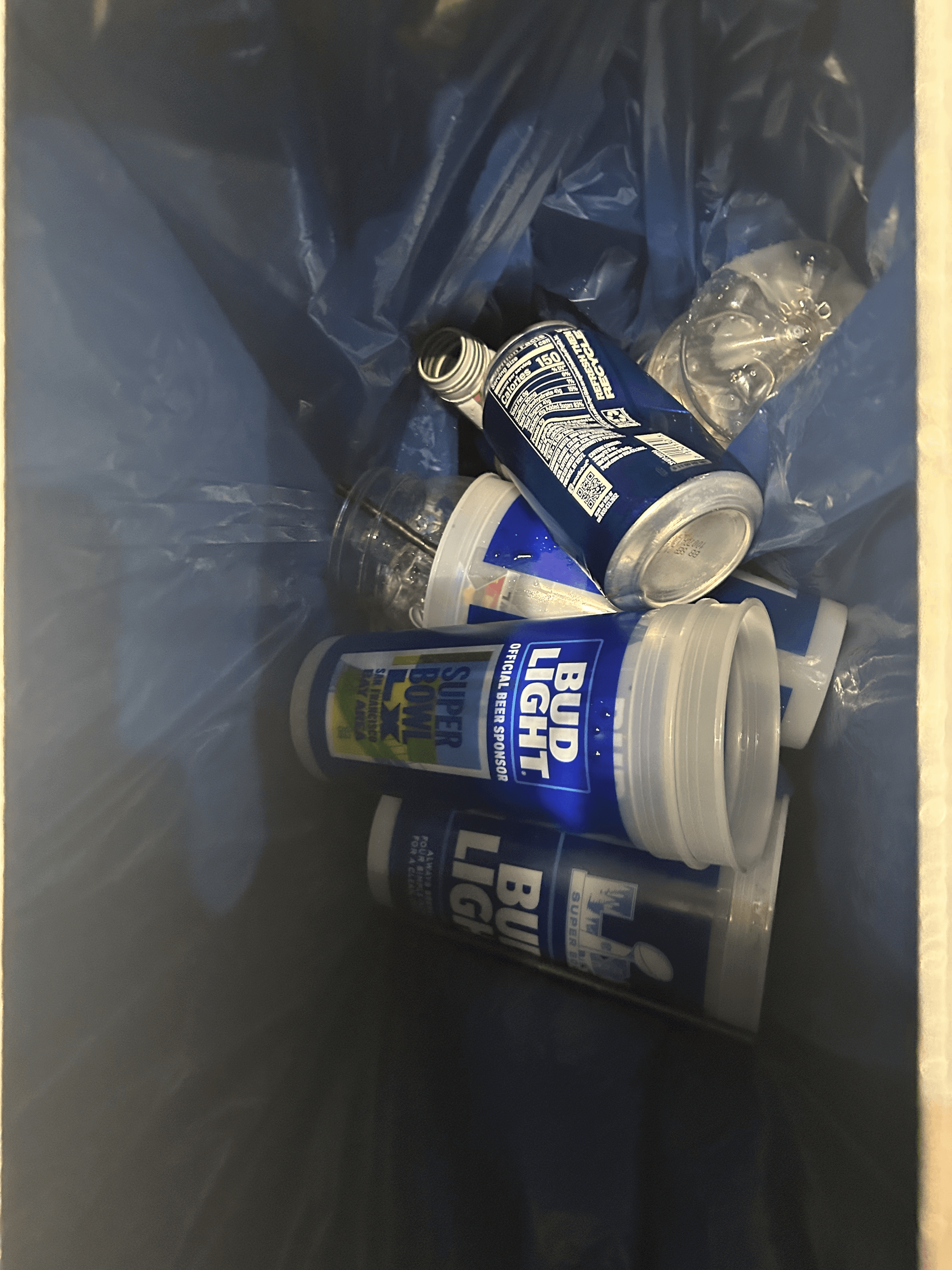
Despite significant emphasis on souvenir behavior, the majority of expensive, thick plastic cups were left behind. Many were placed directly in the trash. Most were not recyclable locally.
Fans were not taking them home in meaningful numbers.
When every item is positioned as a souvenir, it quickly loses its perceived value. What remains is a high-cost, single-use product with a large environmental footprint.
There's an opportunity here to be more intentional—make the everyday experience efficient and sustainable, and offer truly special commemorative items for fans who want something to take home. That choice becomes more meaningful when it's deliberate.
What we took away: Designing around actual fan behavior, rather than assumed behavior, opens up possibilities for better economics and lower environmental impact without sacrificing experience
2. Premium and Sustainable Can Reinforce Each Other
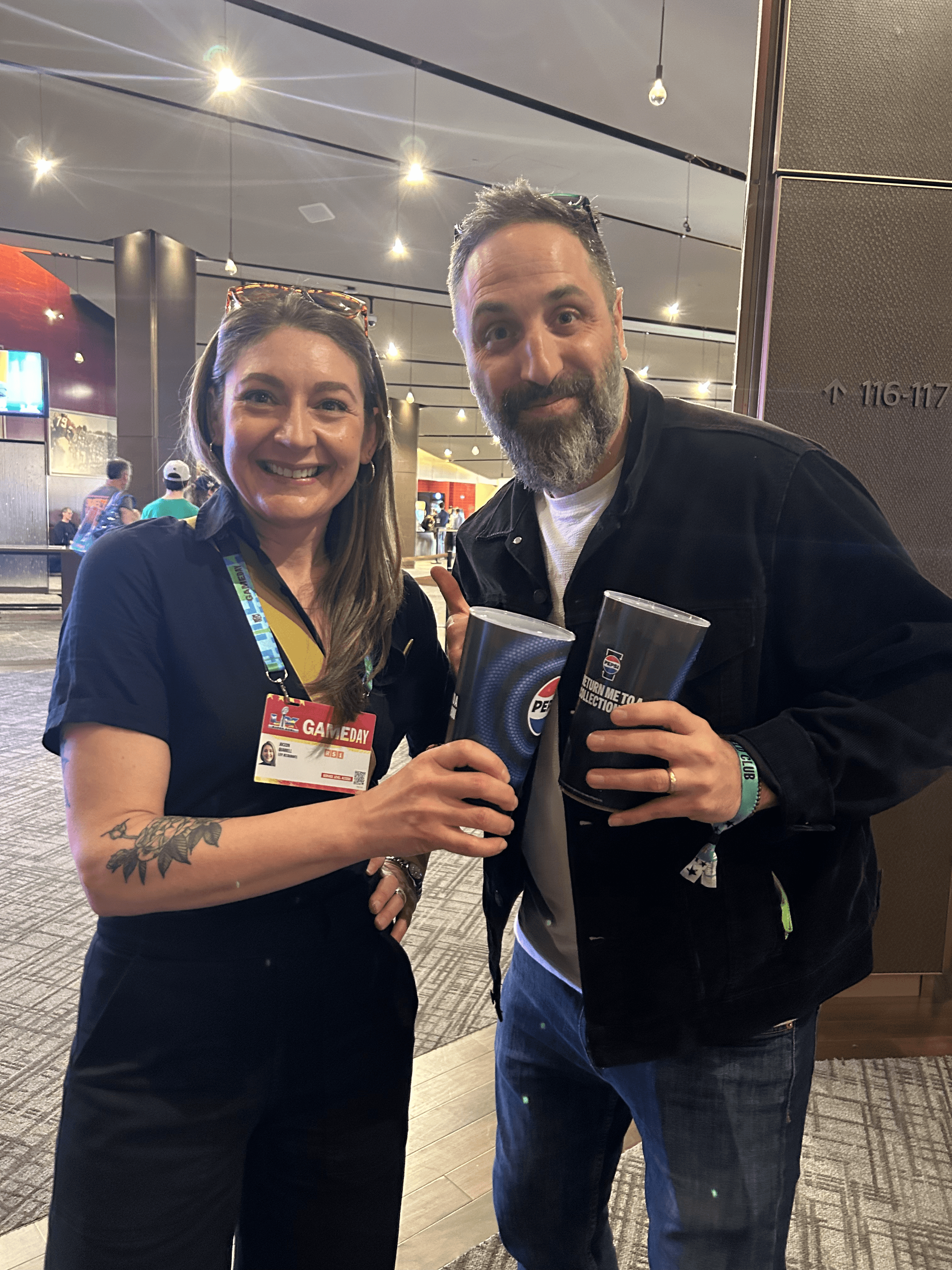
One thing that really stood out was how well sustainability was integrated into the premium experience. The reusable systems that were in place worked smoothly and felt natural, not like a compromise or an add-on.
From an operations perspective, we started thinking about the long-term economics. Reusable systems with swappable branding can be used season after season, event after event. The upfront investment becomes an asset that delivers value repeatedly, rather than a recurring expense.
What we took away: There's a real opportunity to reframe "premium" from material thickness or single-use luxury to system elegance and long-term value. The two don't have to be at odds—they can actually strengthen each other.
3. Fans Are Already There
One of our favorite moments came from conversations with fans visiting from Montreal. They knew exactly what to do with reusable cups and mentioned they'd just used them the week before at a Portland Trail Blazers game.
What made it even better? They had no idea our team actually launched and managed that Portland system. It was such a cool, full-circle moment for us.
But here's why it matters: reuse is already spreading organically across North America. Early adopter venues are normalizing the experience. Fans are building that familiarity and carrying it with them to the next event.
Throughout the day, we saw strong return behavior. Contamination was minimal. Fans just knew what to do.
What we took away: Fan readiness has evolved faster than many industry playbooks have kept pace with. When systems are intuitive and consistent across venues, the learning curve essentially disappears.
4. When Packaging and Infrastructure Don't Align, Everyone Feels It
This is where we noticed the biggest opportunity for improvement—and it's a challenge we see across the industry, not unique to this event.
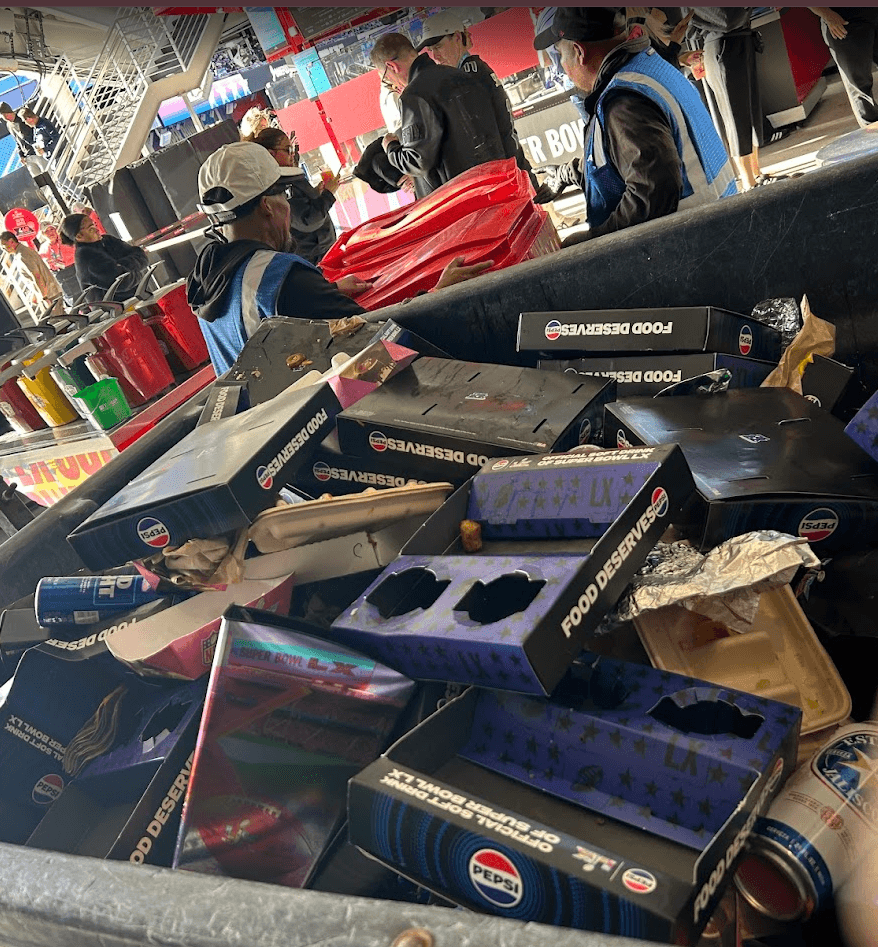
The custom-branded food packaging looked fantastic and clearly had a lot of thought put into the branding. But we noticed it wasn't quite designed to work with the waste infrastructure in the venue. The boxes didn't fit easily into the receptacles, and we witnessed fans trying to fold and compress them to fit in waste bins. Only a few would fit before bins started overflowing.
This created extra work for operations teams who were constantly managing overflow, and it created a less smooth experience for fans who just wanted to dispose of their packaging and get back to enjoying the game.
It's an incredibly common disconnect in the industry. Packaging gets designed in one process, waste infrastructure in another, and they don't always talk to each other. We see it all the time.
But it really highlighted something for us: when you design reusable serviceware and infrastructure together as a system, you can avoid these mismatches entirely. A reusable tray with removable branding fits the receptacles properly, stacks cleanly, and can be washed and rebranded for the next event. Less waste, less labor managing overflow, and a smoother experience for everyone.
What we took away: The biggest operational friction often comes from misalignment between packaging and infrastructure—not from reuse itself. When systems are designed holistically, everything flows better for fans and operations teams alike.
5. Well-Designed Reuse Systems Just Work
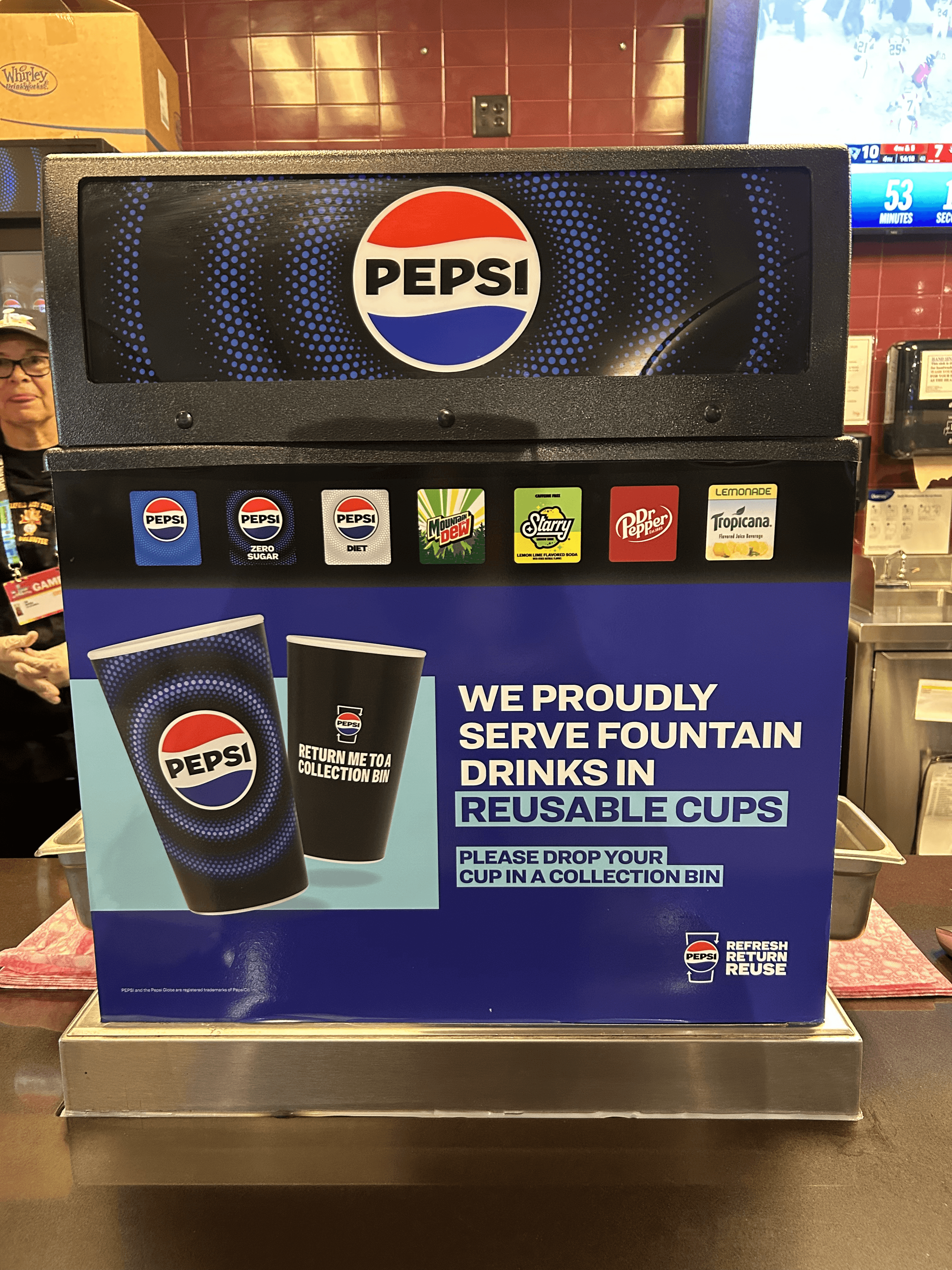
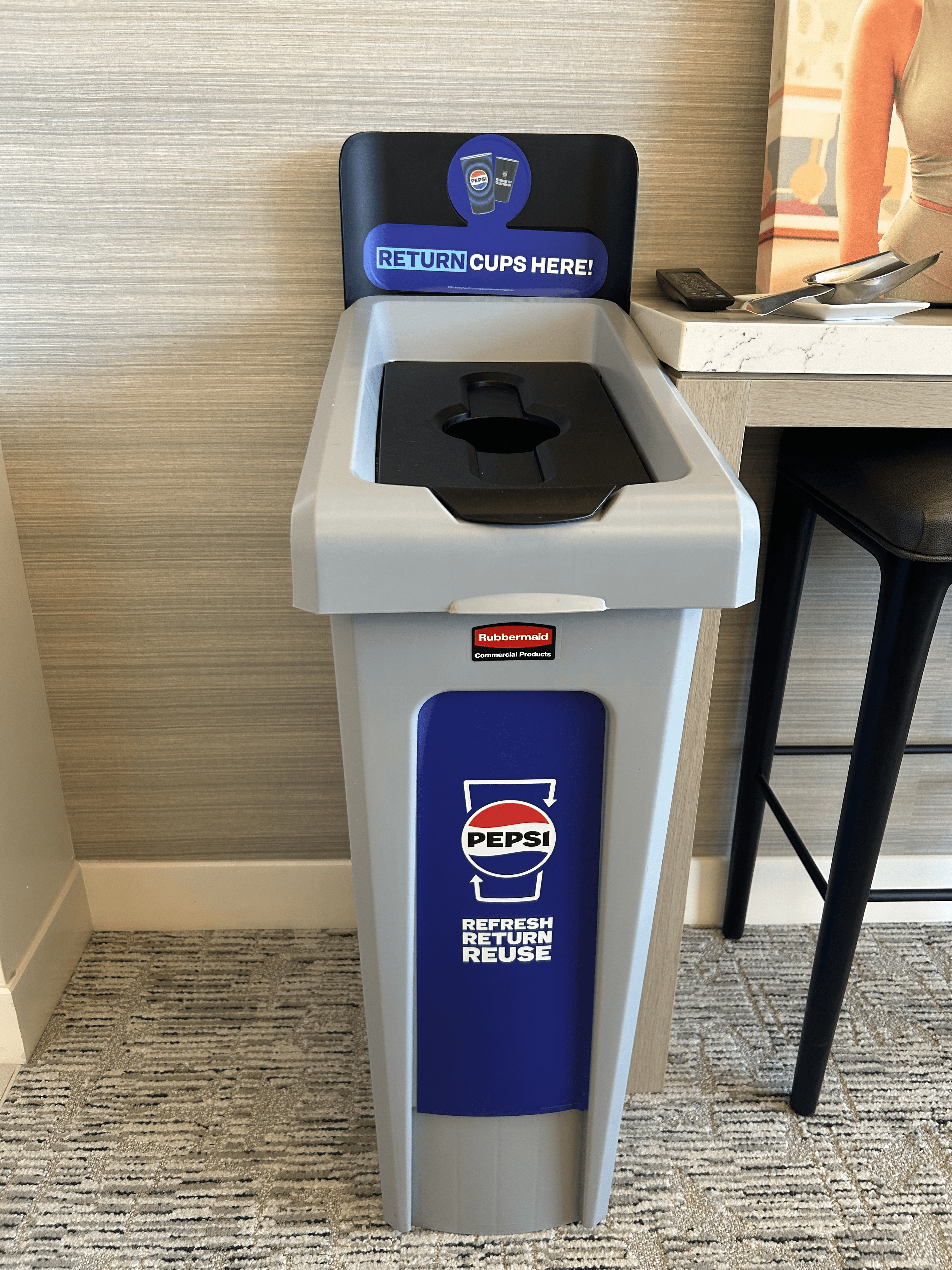
On the flip side, where reusable systems were in place, they worked beautifully.
Returns were strong. Contamination was low. The infrastructure was clear and intuitive, so fans didn't need hand-holding through the process. It just hummed along in the background.
What we took away: When reuse infrastructure is designed thoughtfully, it actually reduces operational complexity rather than adding to it. The key is making the right behavior the easiest behavior.
6. The Experience Was Still Premium
It's worth saying this clearly: the experience was outstanding in every way.
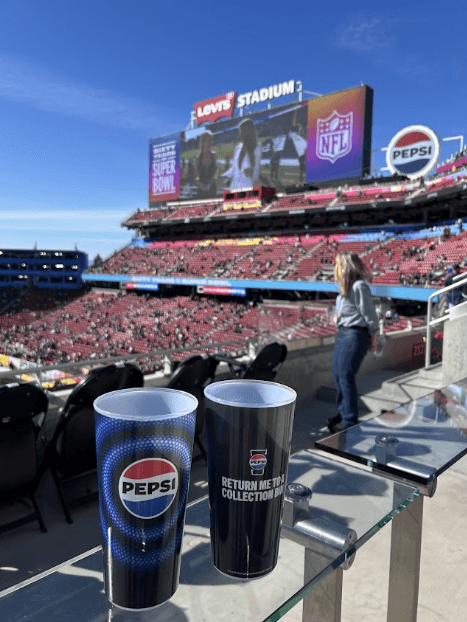
The sustainability elements didn't detract from the event—they enhanced it. They fit naturally into what a world-class experience looks like today. Fans weren't confused or frustrated. It just worked.
What we took away: Reuse and premium experience aren't in tension. When it's done thoughtfully, they reinforce each other and meet the expectations of modern audiences.
What This Means for Venues and Operators
The Super Bowl reinforced a simple truth.
Single-use does not automatically mean easier, cheaper, or better. In many cases, it produces the opposite outcome: higher costs, more labor, more waste, and a worse fan experience.
A reuse-first model, especially in premium experiences, offers:
A smoother guest experience
Lower operational burden
Meaningful cost savings
Major reductions in waste and carbon emissions
The Bigger Picture
The Super Bowl did not feel like a pilot for reuse. It felt like confirmation that reuse is operationally viable at the highest scale.
The question is no longer whether reuse works.
It is why, given what we now see clearly on the ground, it is not already the default.