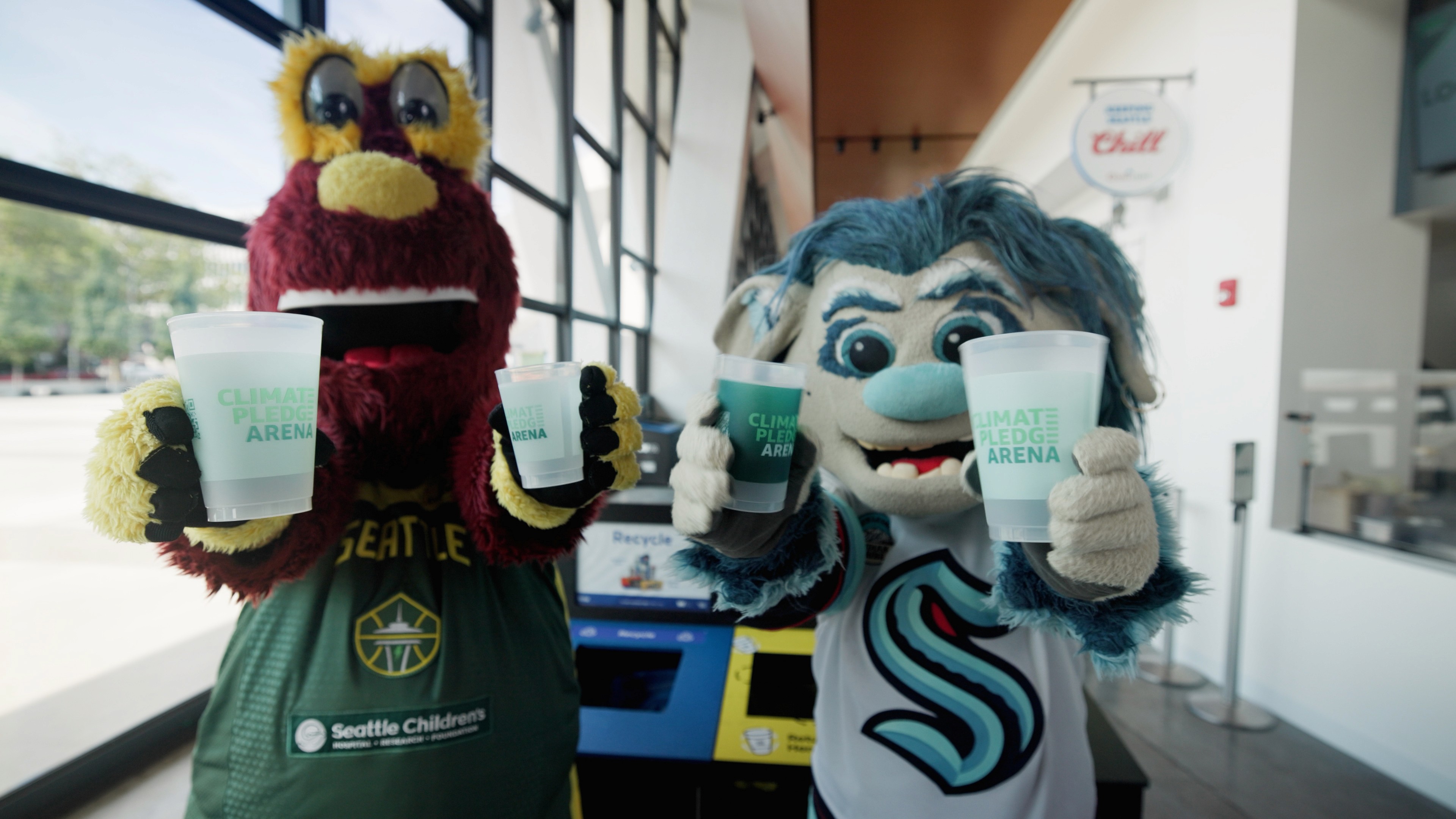
Five takeaways for venue leaders — and what they mean for teams thinking about reuse, fan engagement, sponsorship, and measurable impact.
Bold Reuse Team · May 2026 · 8 min read
Green Sports Alliance made one thing very clear:
Sports sustainability is moving from intention to operations.
The conversation was less about whether sustainability matters and more about how teams, venues, concessionaires, sponsors, cities, and operators make it work in real life.
That shift matters.
For years, sustainability in sports was often framed around public commitments, long-term goals, and brand leadership. Those things still matter. But the strongest conversations at GSA were much more practical.
People were talking about waste rooms. Sorting. Signage. Staff training. Hauler coordination. Fan behavior. Food systems. Sponsorship. Data. Reporting.
That's the real work.
"The strongest conversations at GSA weren't about commitments or goals. They were about waste rooms. Sorting. Signage. Staff training. Hauler coordination."
And it's exactly why reuse is becoming such an important part of the conversation.
Reusable cups and serviceware are not just a packaging choice. Done right, reuse becomes a system that touches operations, fan experience, waste reduction, sponsorship, reporting, and revenue.
Here are the five biggest things we learned.
Sustainability is now a business and operations issue.
Sustainability is no longer sitting in one department.
At GSA, the conversation connected sustainability to venue operations, climate risk, infrastructure, fan safety, public trust, sponsorship, executive leadership, and long-term planning.
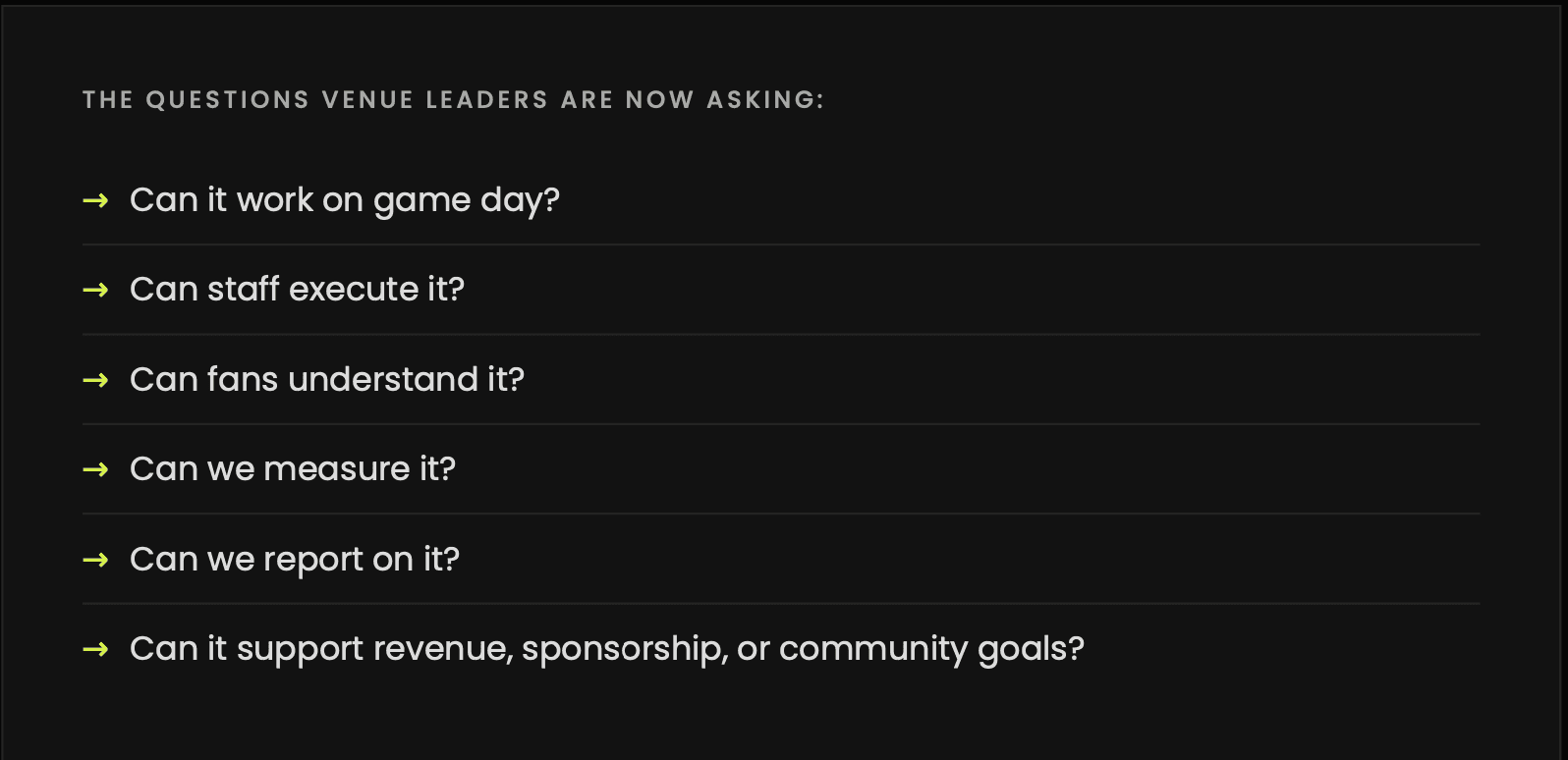
That changes the way the work needs to be positioned. The better question is not only "Is this better for the environment?"
That is where reuse becomes much more interesting.
Reuse helps venues reduce single-use waste, but it also gives teams a measurable system they can operate, improve, and talk about with fans, partners, and leadership.
Venues want practical systems, not big ideas.
The best examples at GSA were operational. Venue leaders talked about what actually has to happen: where materials go, who collects them, how sorting works, how staff get trained, how signage improves, how partners coordinate, and how teams measure success.
A good idea is not enough. It has to work when the building is full, the lines are long, the staff is moving fast, and fans are focused on the event. That's why reuse has to be explained as more than a cup swap.
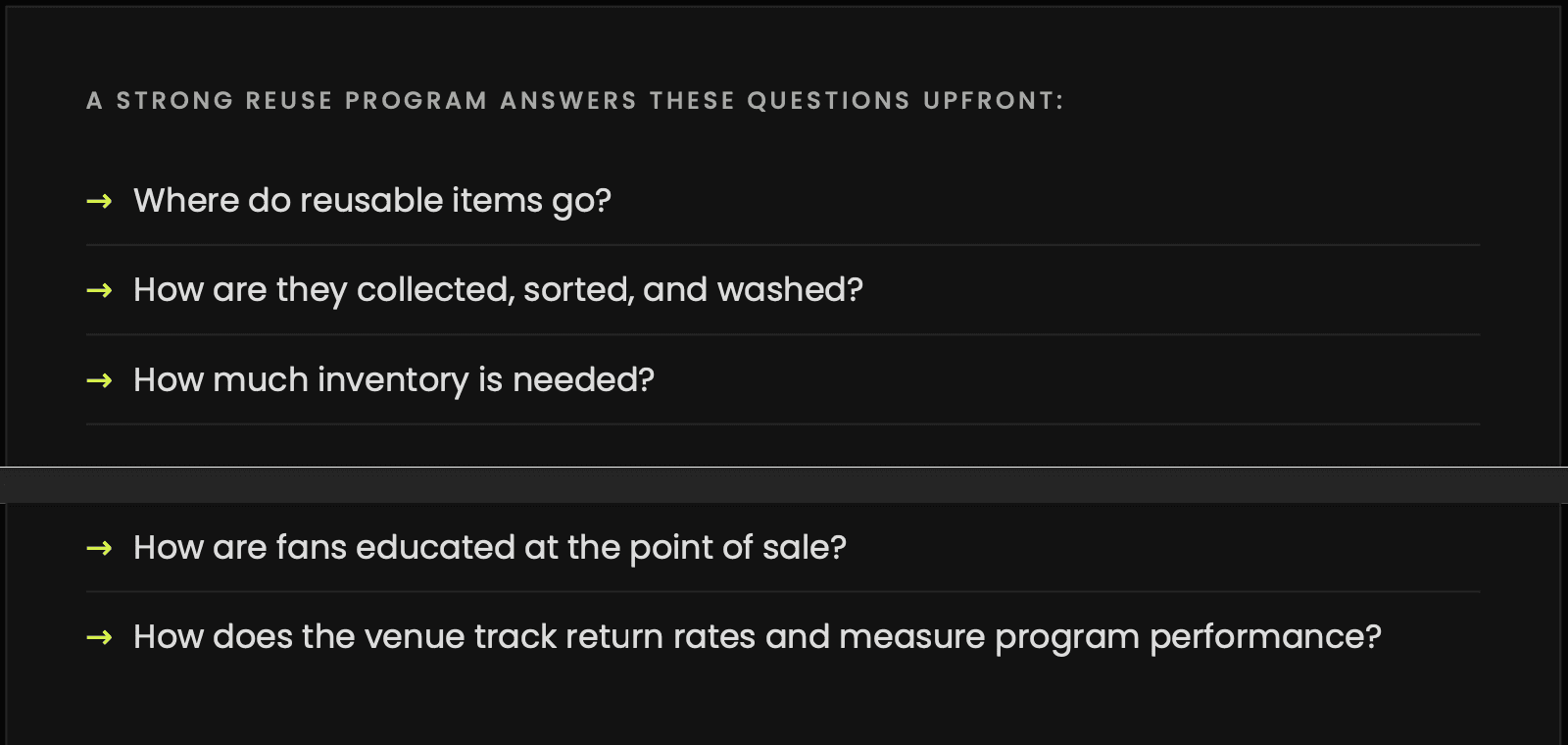
The clearer those answers are, the easier it is for internal teams to say yes.
Fan engagement is a major unlock.
Some of the strongest ideas at GSA came from fan engagement conversations. Teams shared examples like QR-code sustainability trivia, live leaderboards, signed merchandise, volunteer "trash talkers," green games, and visible impact displays.
Fans participate when sustainability is easy, visible, rewarding, and built into the event experience.
That matters for reuse. A reusable cup is not just an operational item. It's something fans hold. Something they see in the concourse. Something they return. It's a physical reminder that the venue is doing something different.
The strongest programs make the behavior obvious before fans have to ask: "What do I do with this when I'm done?"
Ready to talk through what reuse could
look like at your venue?
Bold Reuse can walk through the model, the data, and the operational path forward
Sponsors want visible, measurable sustainability.
GSA reinforced that sustainability can become a stronger sponsorship platform when it's visible, measurable, and connected to the fan experience.
Sponsors increasingly want more than logo placement. They want credible stories. They want measurable impact. They want programs that connect their brand to action.
Reuse gives them that.
A reusable cup is a physical object fans hold, use, return, and notice. It can support branded return bins, green games, reuse challenges, QR-code education, impact recaps, and sponsor reporting.
When reuse is tied to sponsorship, it stops being only a sustainability expense. It becomes a platform for partnership, revenue, fan engagement, and public leadership.
The market wants proof — and the proof is here.
The biggest throughline from GSA was proof. Venue leaders want to know what works. They want to know how reuse compares to single-use. They want to know whether fans participate. They want to know whether the numbers hold up.
Two new data points answer those questions directly.
The new Trail Blazers + Bold Reuse LCA found that reusable cups at Moda Center can reach carbon break-even after just two uses, and produce 74% lower carbon emissions than compostable PLA cups under real operating conditions.
The question "how many times does a cup need to be reused before it's actually better?" now has a clear answer: two.
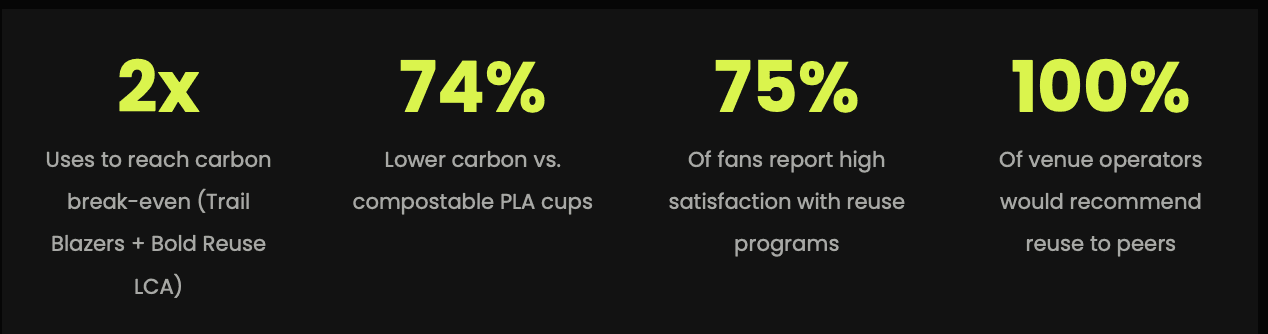
The 2026 Bold Reuse Benchmark Report adds another layer: 72% of fans want reuse at other venues. 71% of venues are seeing measurable cost reductions. 57% reach routine operations within one to three months.
Taken together, GSA, the LCA, and the Benchmark Report all point to the same conclusion: reuse is no longer experimental. The venues that move now have the opportunity to lead the next phase of sports sustainability.
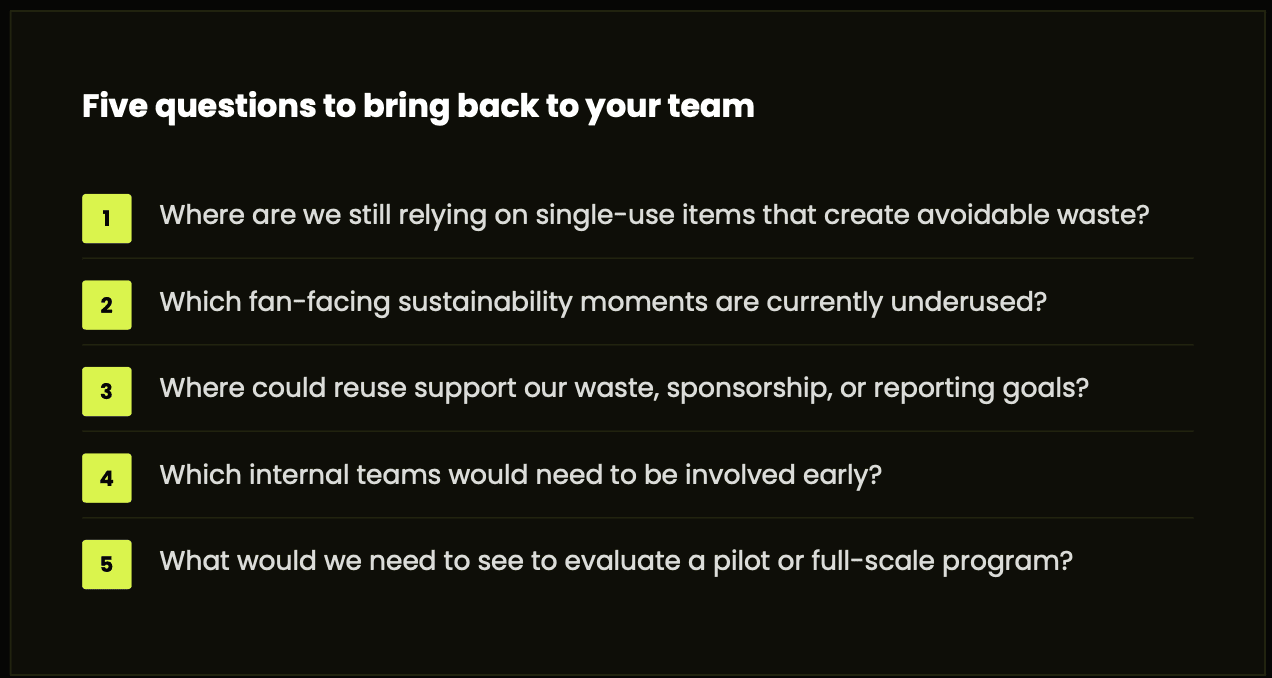
The next phase of sports sustainability will not be won by the venues with the biggest ideas. It will be won by the venues that can operationalize them.
Reuse is one of those ideas whose time has moved from "interesting" to "ready."
Ready to talk through what reuse could
look like at your venue?
Bold Reuse can walk through the model, the data, and the operational path forward